
Device Closure of ASD
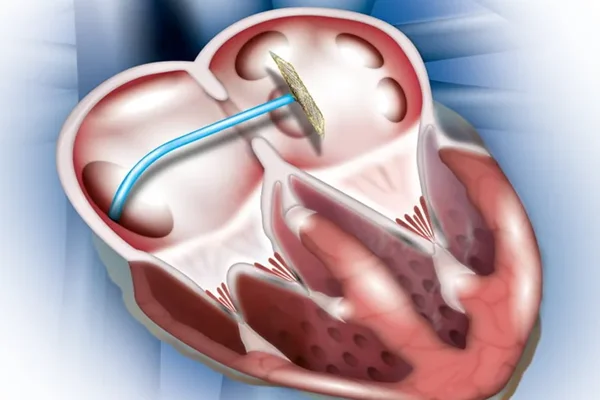
Device Closure of ASD
Some congenital heart conditions can cause abnormal communication between the chambers or blood vessels of the heart. Atrial Septal Defect (ASD), Ventricular Septal Defect (VSD), and Patent Ductus Arteriosus (PDA) are among the conditions that may require closure when they are significant and suitable for intervention.
In selected patients, these defects can be treated through a minimally invasive device closure procedure, avoiding open-heart surgery. Dr. Kamlesh Raut is an experienced Interventional Cardiologist in Dwarka, providing specialized cardiac evaluation and catheter-based interventional care.
The decision to perform device closure depends on the type, size, location, and characteristics of the defect, along with the patient's symptoms, heart function, pulmonary pressure, and other clinical factors.
What Are ASD, VSD and PDA?
Atrial Septal Defect (ASD)
An ASD is an opening in the wall between the heart's two upper chambers, known as the atria. Depending on its size and location, an ASD can allow abnormal blood flow between the chambers and may place additional strain on the heart and lungs.
Some small ASDs may not require closure, while larger or clinically significant defects may require intervention.
Ventricular Septal Defect (VSD)
A VSD is an opening between the heart's two lower chambers, known as the ventricles. The size and location of the defect can influence its effect on blood flow and heart function.
Some VSDs close naturally, while others may require treatment if they cause significant blood flow abnormalities, symptoms, or other complications.
Patent Ductus Arteriosus (PDA)
The ductus arteriosus is a normal blood vessel during fetal development. It usually closes naturally after birth. If it remains open, it is called a patent ductus arteriosus or PDA.
A significant PDA can cause abnormal blood flow between the major blood vessels and may place additional stress on the heart and lungs.
What Is Device Closure?
Device closure is a catheter-based procedure used to close certain structural heart defects without conventional open-heart surgery.
A specialized closure device is delivered through a thin catheter inserted into a blood vessel. The device is carefully positioned across the defect and released once its position and stability have been confirmed.
Over time, heart tissue grows around the device, helping permanently seal the abnormal opening.
When Is Device Closure Recommended?
Device closure may be considered when a congenital heart defect is clinically significant and its anatomy is suitable for catheter-based treatment.
A cardiologist may consider closure when there is:
- Significant abnormal blood flow through the defect
- Enlargement of heart chambers
- Symptoms related to the defect
- Increased pressure in the pulmonary circulation
- Risk of long-term cardiac complications
- A suitable defect size and anatomy for device closure
Not every ASD, VSD, or PDA requires closure, and not every defect is suitable for a device-based approach. A detailed cardiac evaluation and imaging assessment are essential before treatment.
How Is Device Closure Performed?
Before the procedure, Dr. Kamlesh Raut evaluates the patient's medical history, symptoms, heart function, and relevant cardiac imaging. Echocardiography is commonly important for understanding the size and location of the defect.
During the procedure, a thin catheter is introduced through a blood vessel, usually in the groin, and guided towards the heart or relevant blood vessel.
The closure device is carefully advanced through the catheter and positioned across the defect. Imaging guidance is used to confirm that the device is correctly positioned and that it is functioning as intended.
Once the position is satisfactory, the device is released. The catheter is then removed and the access site is managed.
Device Closure of ASD
For selected ASDs, particularly appropriate secundum ASDs, a specialized closure device can be delivered through a catheter and positioned across the opening between the atria.
The suitability of device closure depends on factors such as the size and location of the defect and the surrounding tissue margins. Detailed echocardiographic assessment is important before deciding on treatment.
Device Closure of VSD
Selected VSDs may be suitable for catheter-based device closure. The feasibility depends on the type, location, size, and relationship of the defect to nearby cardiac structures.
Careful imaging and assessment are required because different types of VSD have different anatomical considerations.
Device Closure of PDA
PDA closure can be performed using a specialized occlusion device delivered through a catheter. The device is positioned within the PDA to block the abnormal connection between the major blood vessels.
The appropriate device and technique depend on the size and anatomy of the PDA.
Benefits of Device Closure
Minimally Invasive Approach
Device closure is performed through a catheter rather than conventional open-heart surgery in appropriately selected cases.
No Large Surgical Incision
The procedure generally requires only a small access point for catheter insertion.
Shorter Recovery
Selected patients may recover more quickly compared with traditional surgical closure, although recovery varies depending on the condition and individual health.
Effective Defect Closure
A properly selected closure device can block abnormal blood flow through the defect.
Personalized Treatment
The procedure and device selection are based on the patient's specific cardiac anatomy and clinical requirements.
Recovery & Follow-Up
Patients are monitored after the procedure to ensure that the device is stable and that there are no immediate complications. The catheter access site is also assessed.
Follow-up appointments are important to evaluate the heart's response and confirm that the device remains appropriately positioned. Echocardiography and other investigations may be recommended as part of follow-up care.
Patients should follow all prescribed medications and activity recommendations provided by their cardiologist.
Why Choose Dr. Kamlesh Raut?
Dr. Kamlesh Raut is an experienced Interventional Cardiologist in Dwarka with advanced training in cardiovascular medicine and catheter-based procedures. He completed his MD in Medicine from AIIMS, New Delhi, followed by DM in Cardiology from SGPGIMS, Lucknow.
He currently serves as Senior Consultant – Interventional Cardiologist at Max Super Speciality Hospital, Dwarka. His professional experience includes comprehensive cardiac evaluation and advanced interventional cardiac care.
Dr. Raut follows a patient-centred approach, carefully assessing cardiac anatomy, symptoms, and overall health before recommending an appropriate intervention. For patients with ASD, VSD, or PDA, he evaluates whether catheter-based device closure is suitable based on the individual clinical and anatomical requirements.
Frequently Asked Questions
1. What is device closure of ASD, VSD and PDA?
Device closure is a minimally invasive catheter-based procedure used to close selected congenital heart defects, including certain ASDs, VSDs, and PDAs.
2. Does every ASD require device closure?
No. Small or clinically insignificant ASDs may not require closure. The decision depends on the defect's size, location, blood flow, symptoms, and effect on the heart.
3. Can VSD be closed without open-heart surgery?
Selected VSDs may be suitable for catheter-based device closure. However, suitability depends on the type, location, size, and anatomy of the defect.
4. Can PDA be treated using a device?
Yes. In appropriate cases, a specialized occlusion device can be delivered through a catheter to close a PDA.
5. Is device closure safe?
Device closure is a commonly used minimally invasive treatment for selected congenital heart defects, but like any medical procedure, it carries potential risks. Your cardiologist will discuss the benefits and risks based on your individual condition.
6. Who provides ASD, VSD and PDA device closure in Dwarka?
Dr. Kamlesh Raut is an experienced Interventional Cardiologist in Dwarka providing specialized cardiac evaluation and catheter-based interventional care. The suitability of device closure is determined after detailed cardiac and imaging assessment.